
Informatica
Fast migration to independent data integration that gives you control
Our offering is aimed at data architects, engineers, and IT specialists ready to migrate from Informatica to Qlik Talend solutions. We understand that change can be challenging, which is why we offer flexible and scalable solutions.
Why migrate from Informatica?
The approaching end of support for Informatica PowerCenter 10.5 and the planned acquisition by Salesforce raise many questions about the future of this platform. Qlik Talend provides flexibility and control, enabling you to adapt your infrastructure to your needs.
Changes for Informatica users: End of support is approaching for PowerCenter 10.51, which has been acquired by Salesforce.
Alternatives: Qlik Talend offers data integration solutions that avoid vendor lock-in and forced cloud migration.
Qlik experience: We have a proven migration methodology and support for Informatica users.
Informatica
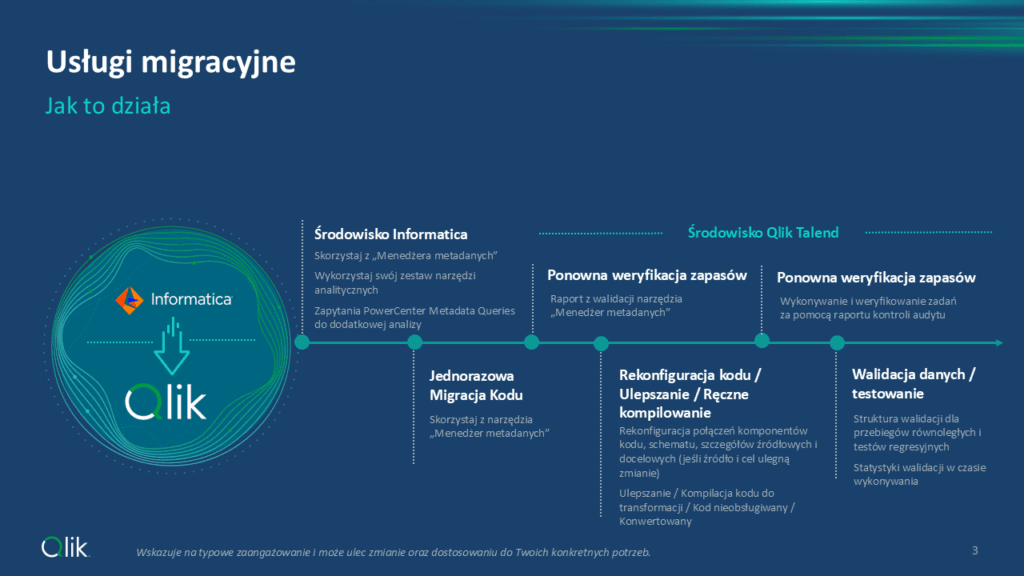
Comprehensive approach to migration
At Qlik, we believe that migration success is more than just technical conversion. Our approach includes:

Current landscape assessment:
Understanding business objectives and future-state architecture.

Migration and optimization:
Efficient transfer of processes from Informatica to Qlik Talend.

Functional equivalence testing:
Ensuring that new processes operate as expected.

Management and operations:
Establishing procedures for long-term success.

Hogart Business Intelligence as a trusted partner
Together with Qlik, we offer:

In-depth data analysis

Seamless migration from Informatica to Talend

Modern approaches to data integration

Data quality and privacy

Education and expert support
Accelerating migration with Qlik tools
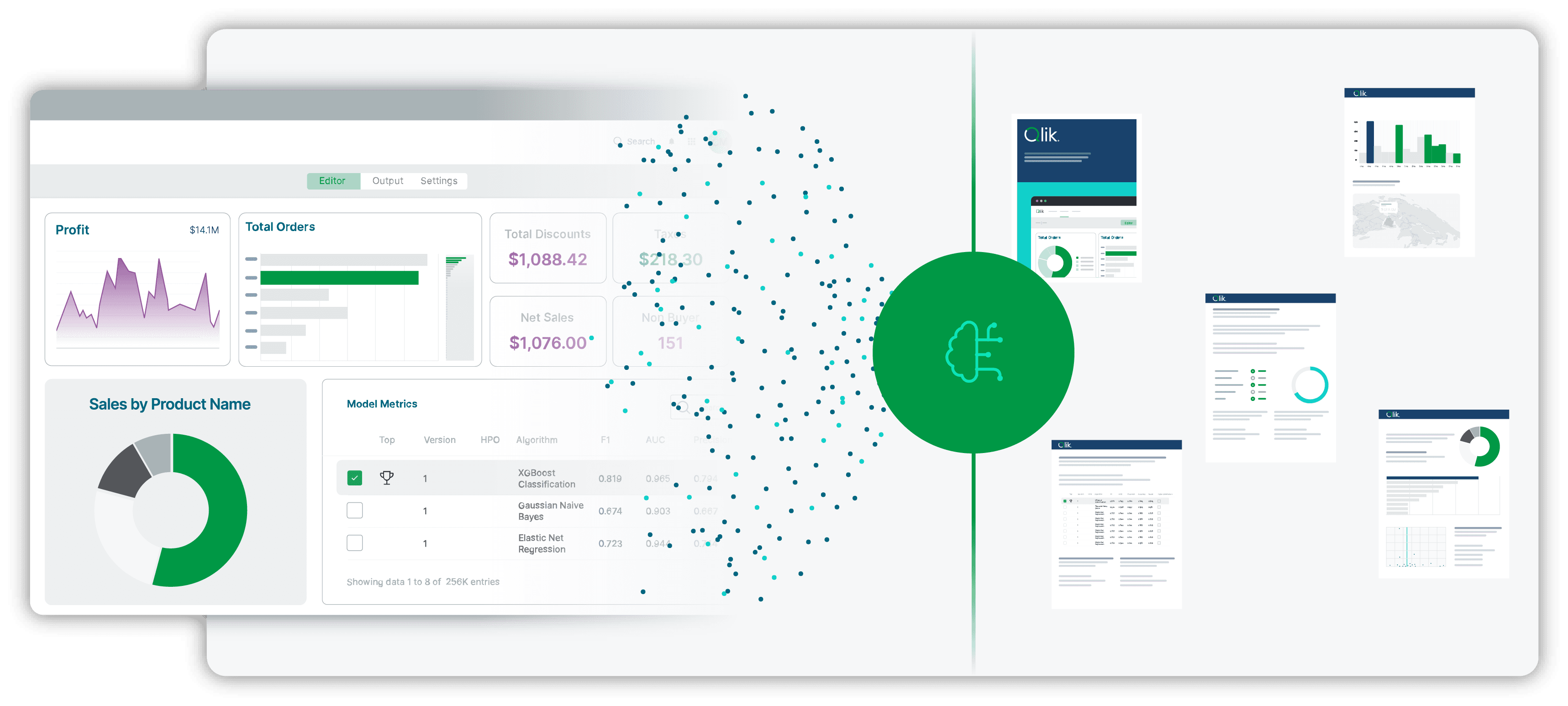
Our ETL conversion tools facilitate migration through automation, enabling faster and more efficient data transfer.
Four R Strategy
With Qlik, we apply the "Four R" strategy to tailor the migration approach to different processes:

Retire: Decommissioning unused processes.
Re-platform: Converting processes as close to the original as possible.
Re-architect: Optimizing existing processes.
Replace: Complete replacement for new requirements.
Success in practice
Examples of successful migrations demonstrate the benefits of transitioning to Qlik Talend — reduced costs, increased flexibility, and improved performance.
Next steps
You don't need to fear migration! With Qlik Talend, you can:

Expect realistic results.
Leverage the latest technologies.
Optimize processes and improve data management quality.
Modernize and manage quality.
Accelerate cloud transition.
1. Future-ready data architecture

Real-time and streaming processing: Qlik Talend's modern architecture supports real-time and streaming data, significantly exceeding the capabilities of traditional batch systems.
Flexible deployments: Choose between on-premise, multi-cloud, or hybrid solutions, avoiding vendor lock-in and scaling your environment with business needs.
AI/ML readiness: Built-in AI support for data quality, pipeline creation automation, and intelligent data management enables you to fully leverage advanced analytics.
Open Lakehouse: Qlik Open Lakehouse facilitates streaming data ingestion, optimization, and analytics, ensuring high performance at optimal costs based on Iceberg Data Lakehouse.
Integrated data quality: Discover, improve, and share trusted data with self-service tools, automating processes, supporting your team, and ensuring regulatory compliance.
Data products and Qlik Trust Score: Share high-quality, AI-ready datasets in the Data Products catalog, enabling faster and more confident decision-making.
2. Operational excellence and developer productivity

DevOps/DataOps automation: Modern integration with CI/CD pipelines reduces manual work and accelerates deployments, unlike legacy platforms.
Developer agility: Native Java code generation ensures portability and eliminates dependencies on proprietary runtime environments.
Scalable compute models: "Scale-to-zero" architecture reduces infrastructure costs while increasing performance and flexibility.
3. Vendor independence and strategic control

Roadmap autonomy: Maintain full control over platform development, without dependence on Salesforce or other vendor schedules.
Technology stack flexibility: Adapt technologies to business evolution, without forced migrations to single-vendor-oriented architecture.
Negotiating power: Maintain competitive vendor relationships, avoiding dependence on a single large player.

“When we began working with Hogart, we noticed improvement: tasks started being completed more efficiently and in less time. Over time, our collaboration evolved dynamically. The company established a dedicated and fully available team of Qlik consultants, supporting us in cyclical BI projects. We are satisfied with the results of the collaboration, which continues to this day.”

Contact
Talk to a Consultant
Are you thinking about implementing Business Intelligence in your organization or do you want to develop your existing BI solutions?
Are you looking for a trusted partner who will help translate data into real business decisions?
Contact us – talk to a Hogart Business Intelligence consultant.
We would be happy to learn about your needs and suggest the best solutions.